Blind people
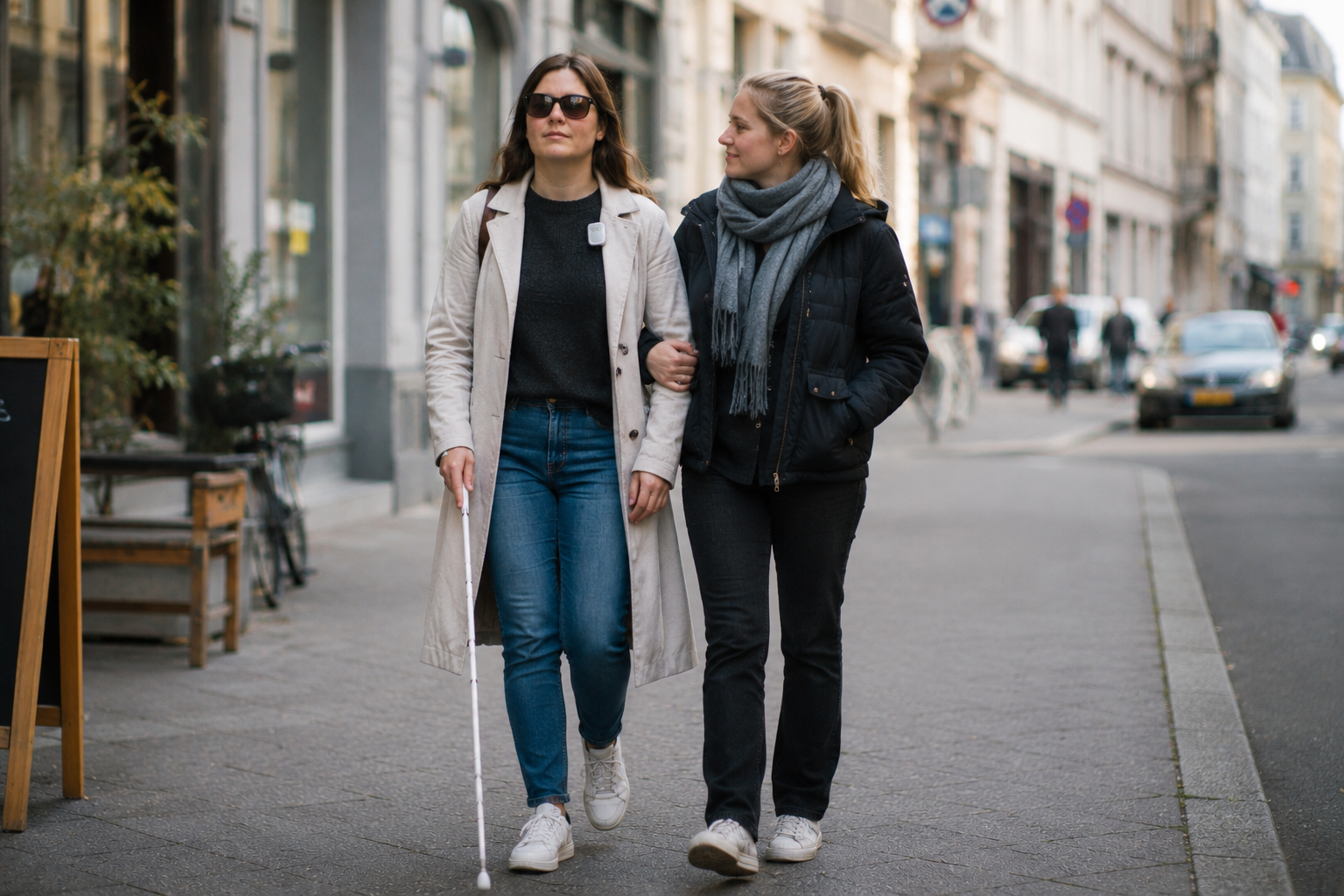
Designed first for people who navigate without sight. Audio and haptics are the primary interfaces; nothing requires a screen.
A wearable AI device that helps blind and low-vision people navigate, identify, and understand the world around them, in the streets, transit, homes and workplaces where they actually live.
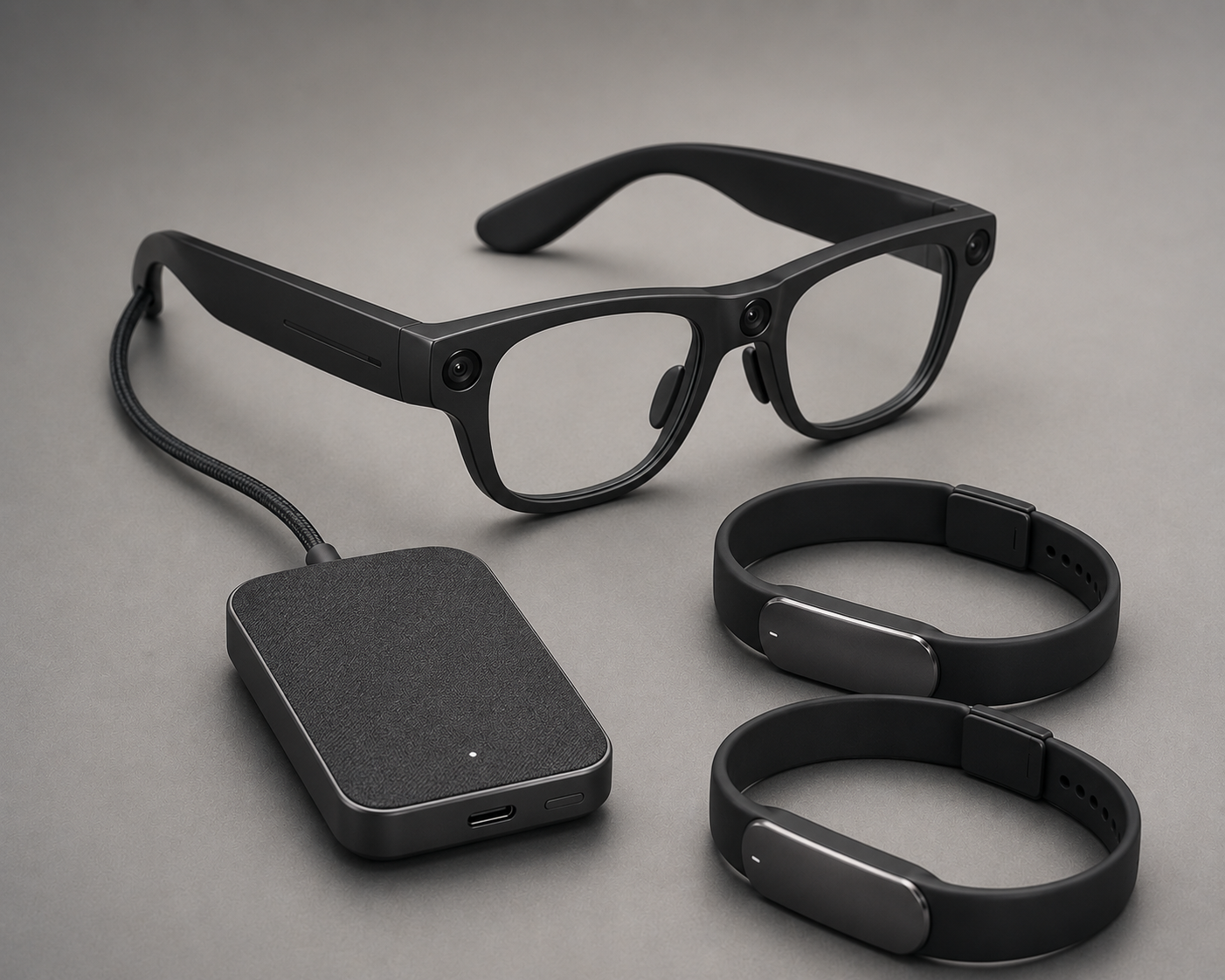
Lightweight glasses, a pocket compute unit, and a pair of haptic wristbands. They listen, look, and tell you what you need to know, quietly, in real time, without a phone screen.
Turn-by-turn guidance through unfamiliar streets, transit, and buildings.
Read a menu, recognise a face, find the door you were looking for.
Describe a room, summarise a sign, answer a question about what’s in front of you.
Every decision is tested with blind users, low-vision users, and disability advocates before it ships. Their feedback overrides our assumptions.
Designed first for people who navigate without sight. Audio and haptics are the primary interfaces; nothing requires a screen.
Adjustable feedback density and a high-contrast companion view for moments when residual vision is useful.
Hands-free use makes the device useful for people with mobility limitations, fatigue, or cognitive load that a phone can’t accommodate.
A tool that complements the cane and the guide dog, with controls instructors can configure for a learner.
The right tool disappears into your day. It does not park you on a helper’s schedule or a phone’s screen.
Blind users deserve products built to the same quality bar as anything sold to sighted users. Better, actually: the cost of failure is higher.
Every decision is tested with blind users, low-vision users, and disability advocates before it ships. Their feedback overrides our assumptions.
What our products see and hear belongs to you. Not to us, not to advertisers, not to the cloud.
We run continuous in-the-wild sessions with blind and low-vision users on the streets, in transit, and in their own homes. The product changes when the people who use it tell us it should.

We’re always glad to hear from people who want to use the device, instructors who want to evaluate it, organisations who want to partner, and investors who back assistive technology.